
A Harvard study tracking more than 90,000 people over 28 years found that those who consumed olive oil daily had a 19 percent lower risk of dying from cardiovascular disease, a 17 percent lower risk of dying from cancer and a 29 percent lower risk of dying from neurodegenerative disease. The health benefits of olive oil and olives are no longer a matter of folk wisdom — they are among the most thoroughly researched findings in modern nutrition science.
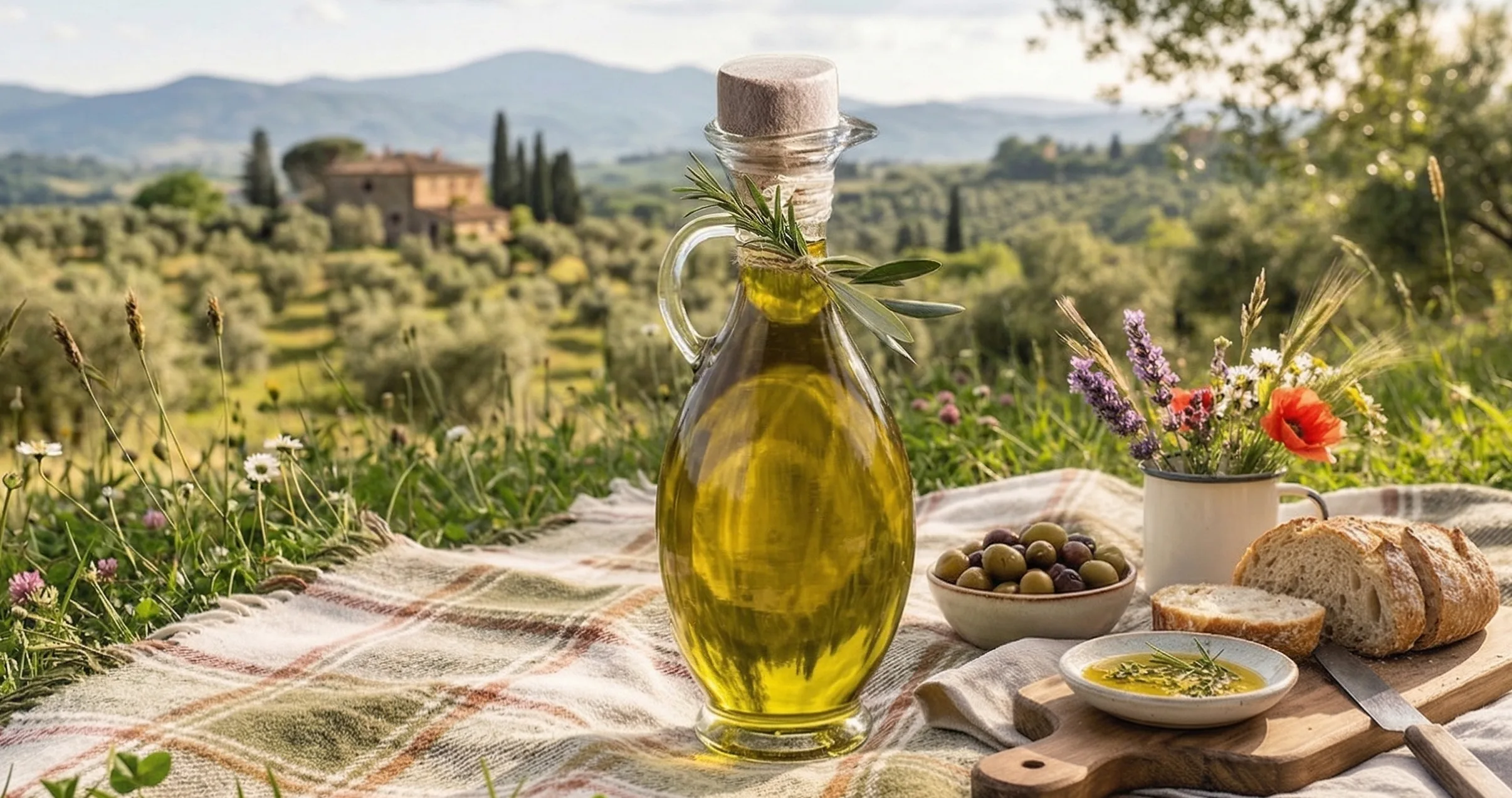
Heart Health: The Most Studied Benefit
The landmark PREDIMED trial, published in the New England Journal of Medicine, remains the gold standard. This randomised controlled trial followed 7,216 people at high cardiovascular risk for nearly five years. Participants who supplemented their diet with extra virgin olive oil experienced a 31 percent reduction in major cardiovascular events and a 42 percent reduction in stroke compared to those on a standard low-fat diet.
A 2022 meta-analysis in Frontiers in Nutrition, covering 261,016 participants across eight cohorts, confirmed the pattern: higher olive oil consumption was associated with a 15 percent lower risk of cardiovascular disease and a 17 percent reduction in all-cause mortality. Each additional five grams per day — roughly one teaspoon — reduced both risks by a further four percent.
The mechanism is well understood. Olive oil polyphenols inhibit the oxidation of LDL cholesterol, the process that drives plaque formation in arteries. High-polyphenol extra virgin olive oil has been shown to increase HDL cholesterol by as much as 50 percent in clinical settings. The European Food Safety Authority has approved an official health claim for olive oil polyphenols, stating that they contribute to the protection of blood lipids from oxidative stress.
Brain Health and Dementia Prevention
Published in JAMA Network Open in 2024, a Harvard study of 92,383 people found that consuming more than seven grams of olive oil per day — just over half a tablespoon — was associated with a 28 percent lower risk of dying from dementia. The finding held even after adjusting for the APOE e4 gene, the strongest known genetic risk factor for Alzheimer’s disease.
Separate research from Temple University demonstrated that extra virgin olive oil preserves memory and learning ability while reducing the formation of amyloid-beta plaques and neurofibrillary tangles — the two hallmark features of Alzheimer’s. A clinical trial found that 30 millilitres of extra virgin olive oil daily for six months improved memory and enhanced brain functional connectivity in individuals with mild cognitive impairment.
A Natural Anti-Inflammatory Compound
In 2005, researchers at the Monell Chemical Senses Center in Philadelphia published a finding in Nature that surprised the medical community. A compound in fresh extra virgin olive oil called oleocanthal inhibits the same cyclooxygenase enzymes as ibuprofen. At equivalent concentrations, oleocanthal is actually more potent — inhibiting 41 to 57 percent of COX activity compared to ibuprofen’s 13 to 18 percent.
The peppery sting at the back of the throat when tasting fresh extra virgin olive oil is caused by oleocanthal. It is a direct indicator of the oil’s anti-inflammatory potency. Fifty grams of extra virgin olive oil daily provides approximately ten milligrams of oleocanthal, equivalent to about ten percent of an adult ibuprofen dose — consumed not as medicine, but as food.
Cancer Risk Reduction
A 2022 meta-analysis published in PLOS One, reviewing 45 studies, found that the highest olive oil consumers had a 31 percent lower likelihood of developing any cancer. For breast cancer specifically, the reduction was 33 percent. A sub-analysis of the PREDIMED trial involving more than 4,000 women found a 62 percent lower risk of malignant breast cancer in the extra virgin olive oil group, though this was a secondary finding with a small number of cases.
The protective effect is attributed to olive oil polyphenols, which reduce oxidised DNA bases and inflammatory markers — processes directly involved in the initiation and progression of cancer.
Type 2 Diabetes Protection
A 2022 meta-analysis in Clinical Nutrition, covering 806,203 participants, found that olive oil consumption was associated with a 22 percent lower relative risk of developing type 2 diabetes. The dose-response analysis showed that benefits become statistically significant at 10 to 20 grams per day — roughly one to one and a half tablespoons. A separate cross-sectional study found that olive oil consumers had a 51 percent lower risk of impaired glucose regulation compared to those using sunflower oil.
Gut Health and the Microbiome
Emerging research points to olive oil as a potent prebiotic. A clinical study found that 50 grams of extra virgin olive oil daily for 12 weeks significantly increased Bifidobacteriaceae, a family of beneficial gut bacteria. Olive oil polyphenols promote the production of short-chain fatty acids, reinforce the intestinal barrier and support microbial diversity.
Table olives offer an additional advantage here. Naturally fermented olives contain probiotic strains of Lactobacillus plantarum and Lactobacillus pentosus — live bacteria that survive digestion and contribute directly to gut health. This is a benefit that olive oil alone does not provide.
Why Whole Olives Matter Too
While most research focuses on olive oil, eating whole olives delivers benefits that oil cannot. A serving of ten olives provides approximately 1.5 grams of dietary fibre — olive oil contains none. Olives are also a meaningful source of iron, providing 41 percent of the daily value per 100 grams, and copper at 28 percent.
Green olives, picked before full ripening, are higher in polyphenols than black olives. The bioactive compounds in whole olives include hydroxytyrosol, oleuropein, tyrosol and quercetin — each with documented antioxidant and anti-inflammatory properties. Oleuropein, in particular, has been shown to have antioxidant potency comparable to vitamins C and E, with cardioprotective, neuroprotective and antimicrobial effects confirmed across multiple studies.
Why Extra Virgin Specifically
Not all olive oil is equal. Refined olive oil contains close to zero polyphenols — the very compounds responsible for most of the health benefits described above. Standard extra virgin olive oil contains 50 to 100 milligrams of polyphenols per kilogram. High-phenolic extra virgin olive oil contains 250 to 500 milligrams or more.
The difference comes down to processing. Cold pressed extra virgin olive oil is extracted at temperatures below 27 degrees Celsius with no chemical solvents. This preserves the full spectrum of over 30 different polyphenol types, including hydroxytyrosol, oleocanthal, oleacein and oleuropein. Refining with heat destroys them.
How Much Per Day
The research converges on a clear recommendation: approximately 20 grams per day, or one and a half tablespoons. The United States FDA has issued a qualified health claim at this dose for coronary heart disease risk reduction. The dose-response data from the largest meta-analyses shows that benefits plateau at around 20 grams — consuming more does not appear to provide additional measurable benefit.
At O for Olive, every bottle of cold pressed extra virgin olive oil from Swartrivier Farm in Prince Albert is produced to preserve the polyphenols that make these health benefits possible. The same applies to every jar of table olives, tapenade and olive chutney — whole olive products with the fibre and probiotics that oil alone cannot deliver.
Find a stockist near you or visit the farm to see how it is made.