
The words on an olive oil label are not marketing. They are a grade, set by chemistry and a tasting panel, and the gap between “extra virgin” and plain “olive oil” is the difference between fresh juice from a fruit and a refined, deodorised product blended back to taste of something. Once you know what each grade promises, the price differences on the shelf stop looking random. Here is how the grades work, why extra virgin sits at the top, and how to read a South African bottle with confidence.
Olives are one of the few snacks that are genuinely good for you, and table olives in a bowl earn their place for the same reasons olive oil does. They are rich in monounsaturated fat and plant antioxidants linked to heart health, lower inflammation and better cholesterol. However, there’s one catch: the salt. This guide covers what olives do for your body, whether green or black is healthier, how many to eat, and how the way an olive is cured changes the answer. We grow and cure our own olives in Prince Albert in the Karoo, 4km outside town, so the salt question is one we live with every season.
Extra virgin olive oil (EVOO) is one of the most studied foods in nutritional science. A 2025 peer-reviewed report of cardiovascular outcomes found regular EVOO consumption improves protection against inflammation, oxidative stress, blood pressure and endothelial function. This guide summarises what the research says, how much you need to take (in tablespoons), how to recognise an oil that delivers benefits, and why Karoo grown EVOO consistently shows higher polyphenol content than most imported alternatives on South African shelves.
South Africa now grows olives in commercial volumes across the Western and Northern Cape, with the Karoo, the Swartland and the Klein Karoo each producing distinct cultivars and styles. This guide explains the main South African olive varieties, how table olives are cured, what to look for on a label, and where to buy South African-grown olives direct from the producer. Written by Swartrivier Farm, a working olive farm.
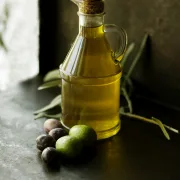
South Africa now sits at number twelve in the world’s olive oil ranking, despite producing under one per cent of the global harvest. In April 2026, De Rustica Olive Estate took first prize at the inaugural NOVA Awards in Córdoba, Spain. Mardouw Olive Estate landed at number twenty-four in the EVOO World Rankings — the highest position any South African producer has reached. The 2026 harvest is in bottle now, the new-season oils are on shelves, and South African olive oil is having a moment that has been twenty-five years in the making. This is the buyer’s guide for anyone wondering where to start, what to look for, and where the high-altitude Karoo orchards fit into the picture.
A 2018 Australian study tested 10 common cooking oils by heating them to 240 degrees Celsius over extended periods. Extra virgin olive oil produced the lowest quantity of harmful compounds of all oils tested — outperforming coconut oil, avocado oil and every seed oil including sunflower, which is the default cooking oil in most South African kitchens. The persistent myth that you cannot cook with extra virgin olive oil has been debunked by the Culinary Institute of America, the USDA and peer-reviewed research. EVOO is not just safe for cooking. It is the most stable option available.
Olive oil contains up to 300 times more squalene than any other vegetable oil — the same compound human skin produces naturally to stay moisturised and protected. A 2024 clinical trial published in Medicina found that olive oil polyphenols applied topically reduced wrinkles by 34 to 52 percent in 30 days. But there is a caveat: a University of Sheffield study found that topical olive oil can damage the skin barrier in some people, and its moderate comedogenic rating makes it unsuitable for oily or acne-prone skin. The emerging consensus is that eating high-quality cold pressed extra virgin olive oil may deliver better, safer skin benefits than applying it directly.
Cold pressed olive oil is extracted at temperatures below 27 degrees Celsius using mechanical force alone — no heat, no chemical solvents. This single constraint preserves over 90 percent of the antioxidants, polyphenols and volatile flavour compounds that make extra virgin olive oil valuable for both health and cooking. Heat extraction, by contrast, destroys up to 30 percent or more of these compounds and produces a bland, nutritionally diminished oil. At O for Olive, every bottle of extra virgin olive oil from Swartrivier Farm in Prince Albert is cold pressed within 24 hours of harvest to preserve the full spectrum of what the olives contain.
A Harvard study tracking more than 90,000 people over 28 years found that those who consumed olive oil daily had a 19 percent lower risk of dying from cardiovascular disease, a 17 percent lower risk of dying from cancer and a 29 percent lower risk of dying from neurodegenerative disease. The health benefits of olive oil and olives are no longer a matter of folk wisdom — they are among the most thoroughly researched findings in modern nutrition science.
A growing body of evidence suggests that South African extra virgin olive oil is not only fresher and more traceable than many imported alternatives — it may also be more likely to be genuine. With 26 percent of imported olive oils in South Africa failing quality tests for extra virgin classification, local producers are making a compelling case for buying homegrown.

Find Us
Swartrivier Farm is 4 km from Prince Albert on the Kruidfontein Road (turn at the Prince Albert Golf Club and follow the signs).