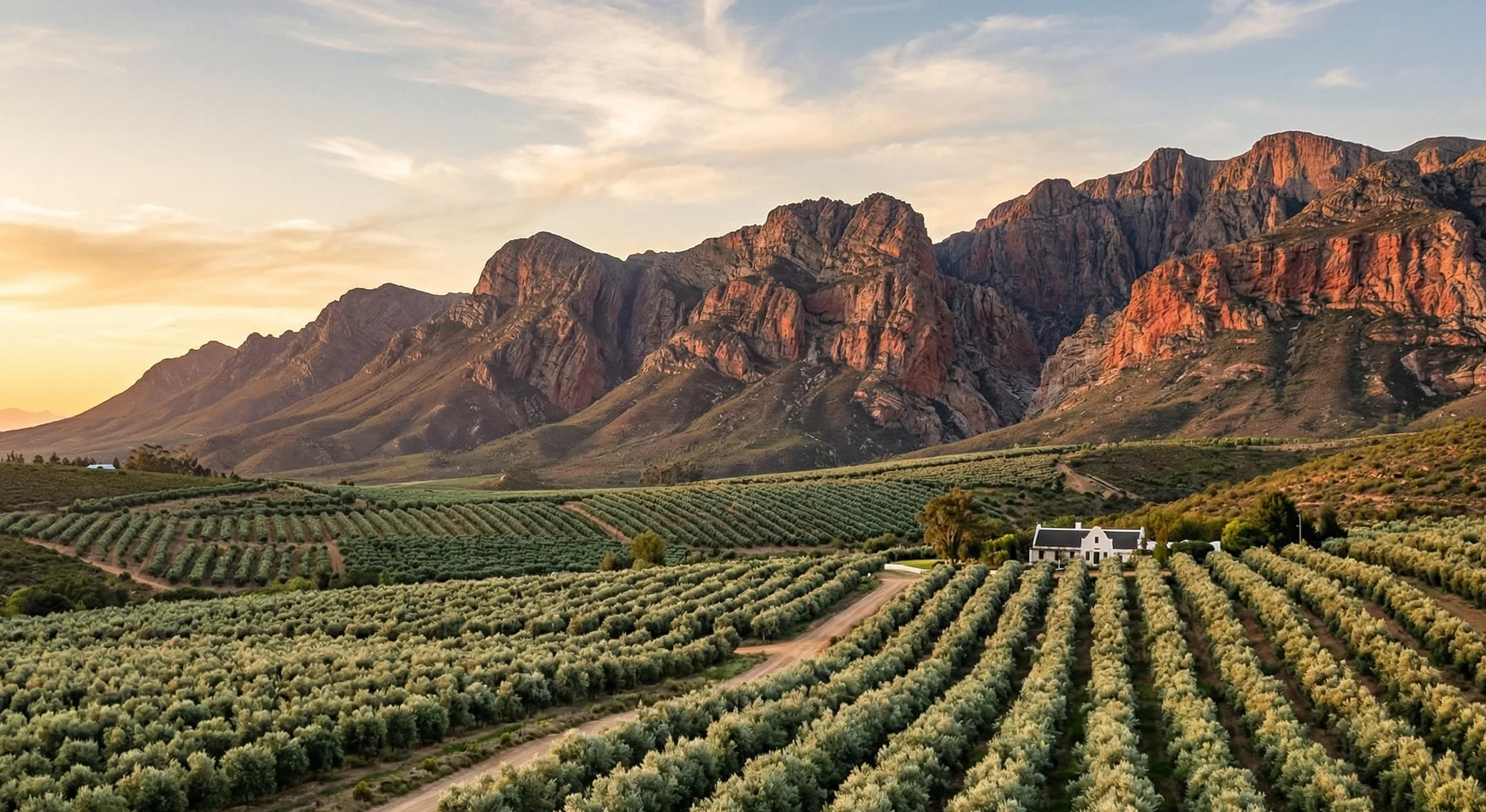
The Swartberg Pass is a gravel road over a mountain, and that means it closes more often than people expect, usually with little warning after heavy rain, snow, or rockfall. If you are planning to drive it, the honest answer to “is it open?” is always the same: check a live source on the day, because a guide written last week cannot tell you what the road is doing this morning. Here is exactly where to check, why the pass closes, when it is most likely to be shut, and what to do if you arrive and the gate is down.
https://www.oforolive.co.za/wp-content/uploads/2026/04/swartberg-pass-mountain-road-sunset.png15602363Kirsty van der Walthttps://www.oforolive.co.za/wp-content/uploads/2020/07/oforolive_black.pngKirsty van der Walt2026-06-17 06:59:092026-06-17 06:59:09Is the Swartberg Pass open? How to check the live status before you drive
Prince Albert is a small Karoo town in the Western Cape, tucked at the foot of the Swartberg Mountains about four hours’ drive from Cape Town, and it has quietly become one of South Africa’s most loved country escapes. People come for the Swartberg Pass and stay for the slow mornings, the Victorian streets, the farm-grown food and a welcome that locals are genuinely proud of. This guide covers how to get here, when to come, where to eat and stay, and what fills a weekend. We farm olives 4km outside the town, so consider this the view from inside the valley rather than from a travel brochure.
https://www.oforolive.co.za/wp-content/uploads/2020/07/oforolive_black.png00Kirsty van der Walthttps://www.oforolive.co.za/wp-content/uploads/2020/07/oforolive_black.pngKirsty van der Walt2026-06-01 05:43:372026-06-18 09:46:53Prince Albert, South Africa: A local guide to the Karoo's friendliest town
Drive four kilometres out of Prince Albert village along Kruidfontein Road and the Karoo does what the Karoo does: stripped earth, stone, scrub, the long flat horizon broken only by the Swartberg Mountains in the distance. Then the road bends, the gate opens onto Swartrivier Farm, and the landscape changes completely. Lawns. Fountains. A working olive grove of 3,000 trees. A shaded verandah looking out over the orchard to the mountains. This is Café O, the on-farm restaurant at O for Olive, and it is the contrast — green oasis after the dry drive — that visitors remember first. The food is what brings them back. For the broader picture, see our Prince Albert restaurants comparison.
https://www.oforolive.co.za/wp-content/uploads/2026/04/kudu-salami-pizza-cafe-o-prince-albert.jpg8001200Kirsty van der Walthttps://www.oforolive.co.za/wp-content/uploads/2020/07/oforolive_black.pngKirsty van der Walt2026-04-26 02:09:402026-09-03 05:30:02Why Café O on a Working Karoo Olive Farm Has Become Prince Albert's Most Loved Lunch Stop
The Western Cape produces 93 percent of South Africa’s olive oil, and the farms that make it are spread across three distinct regions — the Cape Winelands (30 to 90 minutes from Cape Town), the Breede River Valley and Route 62 corridor (90 minutes to 3 hours), and the Karoo (4 to 5 hours). Each region offers a different experience: quick tastings paired with wine in the Winelands, award-winning estates along the Breede River, and immersive farm-to-table experiences in the Karoo. Here are the olive farms worth visiting, organised by route.
https://www.oforolive.co.za/wp-content/uploads/2020/07/oforolive_black.png00Kirsty van der Walthttps://www.oforolive.co.za/wp-content/uploads/2020/07/oforolive_black.pngKirsty van der Walt2026-04-12 05:23:032026-09-03 05:30:00Olive Farms to Visit in the Western Cape: A Guide for Every Route
Prince Albert is a five-hour drive from Cape Town, has more restaurants per capita than most towns in the Western Cape, sits at the foot of a UNESCO World Heritage mountain pass and offers stargazing so clear that professional astronomy operators have set up here permanently. A two-night weekend covers the Saturday market, a Swartberg Pass drive, an olive farm tour with tasting, award-winning cheese, at least two memorable dinners and a night sky you will not see anywhere near a city. Here is how to spend it. For a full guide, see our Prince Albert restaurants.
https://www.oforolive.co.za/wp-content/uploads/2020/07/oforolive_black.png00Kirsty van der Walthttps://www.oforolive.co.za/wp-content/uploads/2020/07/oforolive_black.pngKirsty van der Walt2026-04-10 22:07:382026-09-03 05:29:58A Weekend in Prince Albert: The Perfect Karoo Itinerary
Prince Albert has more restaurants per resident than almost any town in the Western Cape, and each one draws on the same Karoo pantry: slow-roasted lamb, artisan cheeses from Gay’s Guernsey Dairy, cold pressed olive oil from Swartrivier Farm and seasonal produce from the surrounding valley. From a six-table kitchen that has served the same menu for 24 years to a working olive farm where lunch comes with mountain views and an olive tasting, here is where to eat in Prince Albert and what each restaurant actually offers in 2026.
https://www.oforolive.co.za/wp-content/uploads/2020/07/oforolive_black.png00Kirsty van der Walthttps://www.oforolive.co.za/wp-content/uploads/2020/07/oforolive_black.pngKirsty van der Walt2026-04-10 22:07:352026-05-12 15:14:42Prince Albert Restaurants: Where to Eat in the Karoo’s Favourite Foodie Town
The Swartberg Pass is a 27-kilometre gravel road that climbs 1,585 metres through one of the most dramatic mountain crossings in South Africa. Built by Thomas Bain between 1881 and 1888 and now a UNESCO World Heritage Site, it connects Oudtshoorn to Prince Albert in 1.5 hours of driving. This guide covers timing, named stops, vehicle requirements, the Die Hel detour, where to refuel and where to eat at the end of the pass.
https://www.oforolive.co.za/wp-content/uploads/2020/07/oforolive_black.png00Kirsty van der Walthttps://www.oforolive.co.za/wp-content/uploads/2020/07/oforolive_black.pngKirsty van der Walt2026-04-07 19:08:452026-05-12 15:14:40The Swartberg Pass Road Trip: A Complete Guide to Stops, Safety and Where to Eat
In a region celebrated for lamb and wide open skies, a wood-fired pizza topped with kudu salami is quietly becoming one of the most talked-about dishes in the Karoo. At Cafe O on Swartrivier Farm in Prince Albert, it brings together game meat from the veld and artisan food made by hand — a single plate that captures the flavour of the landscape it comes from.
The dish is not complicated. Hand-stretched dough, a wood-fired oven, tomato sauce, mozzarella and slices of cured kudu salami finished with a drizzle of cold-pressed extra virgin olive oil from the farm next door. Yet it is this simplicity that keeps drawing visitors back, and it has become a quietly persuasive reason to add Prince Albert to a Karoo itinerary.
https://www.oforolive.co.za/wp-content/uploads/2020/07/oforolive_black.png00Kirsty van der Walthttps://www.oforolive.co.za/wp-content/uploads/2020/07/oforolive_black.pngKirsty van der Walt2026-03-31 19:01:342026-09-03 05:29:56Kudu Salami Pizza: The Wood-Fired Karoo Classic Drawing Visitors to Prince Albert
The Swartberg Pass, a UNESCO World Heritage Site carved through ancient quartzite mountains, has become one of the most celebrated road trip routes in the Western Cape — and the small Karoo town of Prince Albert, waiting on the other side, is the reason more travellers are making the journey every year.
The 27-kilometre gravel pass, built by master road engineer Thomas Bain between 1881 and 1888, connects the lush Klein Karoo to the arid Great Karoo through a landscape so geologically significant that it earned its place on the UNESCO list in 2011. For visitors driving from Cape Town, it is the dramatic final act of a road trip that combines coastal scenery, wine country charm and high-mountain spectacle in a single day.
https://www.oforolive.co.za/wp-content/uploads/2020/07/oforolive_black.png00Kirsty van der Walthttps://www.oforolive.co.za/wp-content/uploads/2020/07/oforolive_black.pngKirsty van der Walt2026-03-31 19:01:322026-05-31 18:04:06The Swartberg Pass Road Trip: A Complete Guide from Cape Town to Prince Albert
Prince Albert has long been called the Jewel of the Karoo, and the title is not an exaggeration. This small town at the foot of the Swartberg Mountains has reinvented itself as one of South Africa’s most compelling food, art and nature destinations, a place where farm-to-table dining, world-class mountain passes and night skies free of light pollution converge in a single, unhurried weekend. Here is what to do when you get there, organised by visitor type and by the time of day each activity makes most sense.
WHICH PRINCE ALBERT DAY FOR YOU
The food and farm day: Saturday market, olive farm tour and tasting at Swartrivier, long lunch at Cafe O, dinner at Karoo Kombuis
The mountain and views day: Swartberg Pass crossing, lunch at Cafe O on the descent, late afternoon walk in the village
The slow weekend: Friday arrive and dine, Saturday market and olive farm, Sunday Swartberg Pass and lunch out
The art and heritage day: Fransie Pienaar Museum, Church Street galleries, Karoo Kombuis dinner
The stargazing trip: Day at the olive farm or fig farm, dinner at Lazy Lizard, late-night sky tour from a local guesthouse
https://www.oforolive.co.za/wp-content/uploads/2020/07/oforolive_black.png00Kirsty van der Walthttps://www.oforolive.co.za/wp-content/uploads/2020/07/oforolive_black.pngKirsty van der Walt2026-03-30 10:10:492026-05-12 15:20:57What to Do in Prince Albert: The Karoo Town That Serves Up Food, Art and Mountain Views
Find Us
Swartrivier Farm is 4 km from Prince Albert on the Kruidfontein Road (turn at the Prince Albert Golf Club and follow the signs).