
Tucked beneath the Swartberg Mountains, just four kilometres from the centre of Prince Albert, lies Swartrivier Farm — a working olive estate that has quietly earned its place as one of the Great Karoo’s most compelling visitor experiences. Long before olive tourism became a talking point in the Western Cape, this farm was pressing fruit and welcoming guests. It remains, by all accounts, the original Karoo olive farm.
Where It All Began: Swartrivier and the Karoo Olive Story
The story of olives in Prince Albert is older than most visitors expect. While the Western Cape’s winelands dominate the agricultural tourism map, the semi-arid Karoo has been producing olives for generations. Swartrivier Farm, home to O for Olive, sits at the heart of this tradition.
The farm’s groves stretch across the valley floor, fed by the Swart River and sheltered by the dramatic folds of the Swartberg range. The climate — hot, dry summers and cold winters — is ideally suited to olive cultivation. It produces fruit with concentrated flavour and high polyphenol content, characteristics that have helped South African olive oils compete on the world stage.
For visitors arriving from the N1 or via the spectacular Swartberg Pass, the farm is an easy detour that quickly becomes the highlight of the trip.
Walking the Groves: The Olive Farm Experience
A visit to Swartrivier is not a polished, ticketed affair. It is a genuine farm experience. Guests are welcome to walk through the olive groves, observe the trees at various stages of growth, and — during harvest season from late March to June — watch the fruit being picked and pressed.
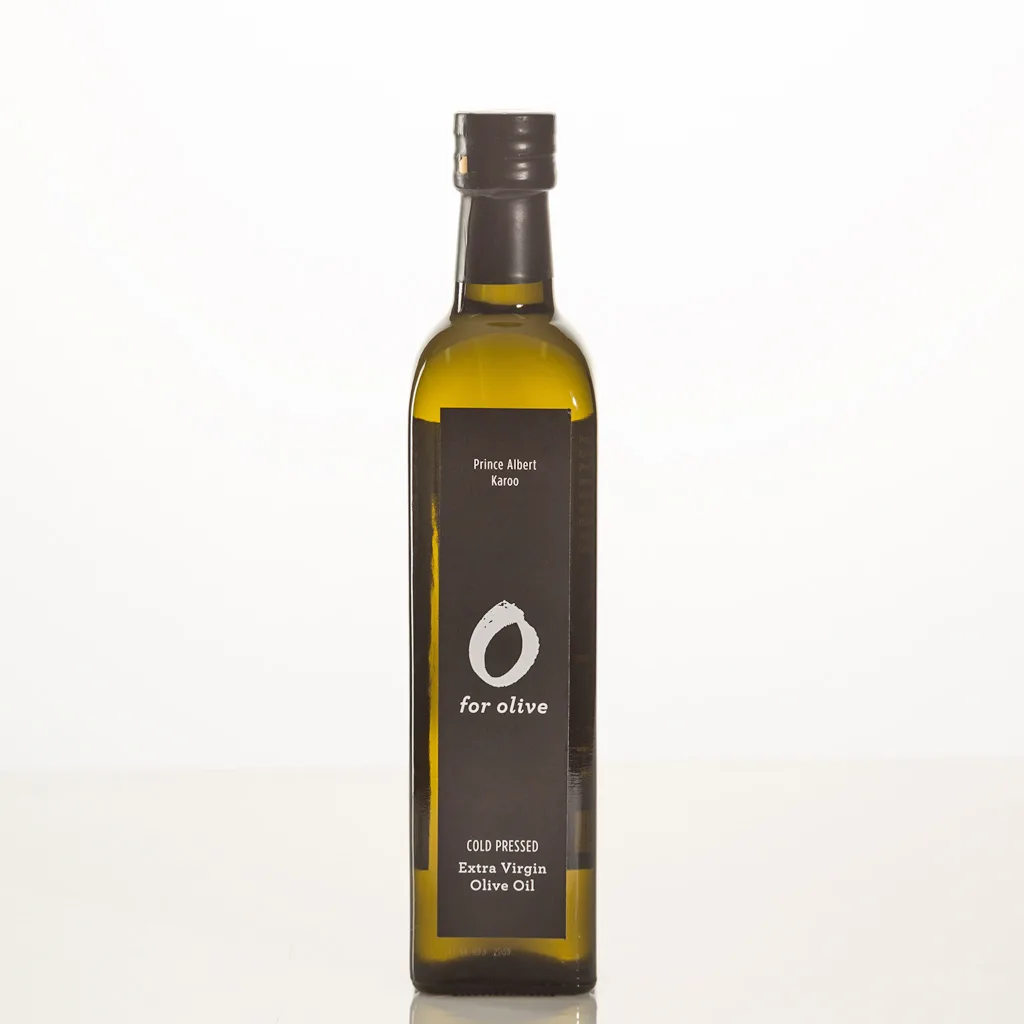
The on-site olive press is the centrepiece of the operation. Cold-pressed extra virgin olive oil is produced in small batches, ensuring quality control from tree to bottle. Staff are happy to explain the process: how olives are washed, crushed, and separated, and why cold pressing matters for flavour and nutrition.
Tastings are offered in the farm shop, where visitors can sample the estate’s range of extra virgin olive oils, flavoured oils, table olives, and olive-based products. It is an education in terroir — Karoo olive oil tastes different from its coastal or Mediterranean counterparts, and the tasting makes that distinction vivid.
Café O: Wood-Fired Pizza and Garden Dining in the Karoo
No visit to Swartrivier is complete without a meal at Café O, the farm’s restaurant. Set in a shaded garden with views of the surrounding mountains, it serves wood-fired pizzas, Mediterranean-inspired tapas, light lunches and homemade desserts.
The menu leans heavily on the farm’s own produce. Olive oil features in almost every dish, from the pizza bases to the salad dressings. Local Karoo ingredients — lamb, figs, cheese from nearby dairies — round out the offering. It is farm-to-table dining in the most literal sense.
The atmosphere is unhurried. Families spread across the lawn, couples linger over coffee, and the occasional farm dog wanders between tables. It is precisely the kind of place that Prince Albert does well: relaxed, authentic and unrushed.
The Swartberg Backdrop: Landscape as Attraction
Part of what makes Swartrivier special is its setting. The Swartberg Mountains, a UNESCO World Heritage buffer zone, rise sharply to the south. The light in the Karoo is extraordinary — painters have been drawn to Prince Albert for decades, and photographers find the farm an irresistible subject.
In autumn, when the olive harvest begins, the groves take on golden tones against the blue-grey mountain backdrop. In summer, the Swart River brings a ribbon of green through the otherwise sparse landscape. Every season offers a different visual experience.
The Farm Shop: Taking the Karoo Home
The farm shop at Swartrivier stocks the full O for Olive product range. The 500ml and 250ml bottles of extra virgin olive oil are the bestsellers, but the mixed table olives, olive tapenade and olive oil soap are equally popular with visitors.
For those who cannot visit in person, O for Olive products are available through select retailers and online. But there is something about buying a bottle at the source — still carrying the scent of the press room — that no online order can replicate.
When to Visit: Seasons, Festivals and the Olive Harvest
Swartrivier is open year-round, but certain times offer a richer experience. The olive harvest runs from late March through June, making autumn the ideal time for visitors who want to see the press in action.
April brings the annual Prince Albert Olive Festival, a celebration of the town’s olive heritage that draws food lovers from across the country. The festival features tastings, cooking demonstrations, farm tours and live entertainment. It has become one of the Karoo’s most anticipated food events.
Winter in the Karoo is cold and crisp — ideal for long lunches at Café O beside the wood-fired oven. Summer visitors should plan for early mornings or late afternoons, as midday temperatures in Prince Albert can exceed 40°C.
Getting There: Directions to Swartrivier Farm
Prince Albert is approximately 400 kilometres from Cape Town, reached via the N1 and the R407 turnoff near Three Sisters, or via the R62 and the breathtaking Swartberg Pass from Oudtshoorn. Swartrivier Farm is signposted four kilometres outside town on the road towards the pass.
The drive itself is part of the appeal. Route 62, often called South Africa’s answer to America’s Route 66, passes through some of the most dramatic scenery in the Western Cape. Arriving via the Swartberg Pass — a gravel road built by hand in the 1880s — is an experience in its own right.
Visit O for Olive at Swartrivier Farm
Whether drawn by the olive oil, the food, the mountains or simply the need to slow down, visitors to Swartrivier Farm invariably leave with the same impression: this is the Karoo at its most genuine. No pretence, no rush, just good food, good oil and a landscape that stays with you long after the drive home.


 The Homegrown Chef