
A 2018 Australian study tested 10 common cooking oils by heating them to 240 degrees Celsius over extended periods. Extra virgin olive oil produced the lowest quantity of harmful compounds of all oils tested — outperforming coconut oil, avocado oil and every seed oil including sunflower, which is the default cooking oil in most South African kitchens. The persistent myth that you cannot cook with extra virgin olive oil has been debunked by the Culinary Institute of America, the USDA and peer-reviewed research. EVOO is not just safe for cooking. It is the most stable option available.
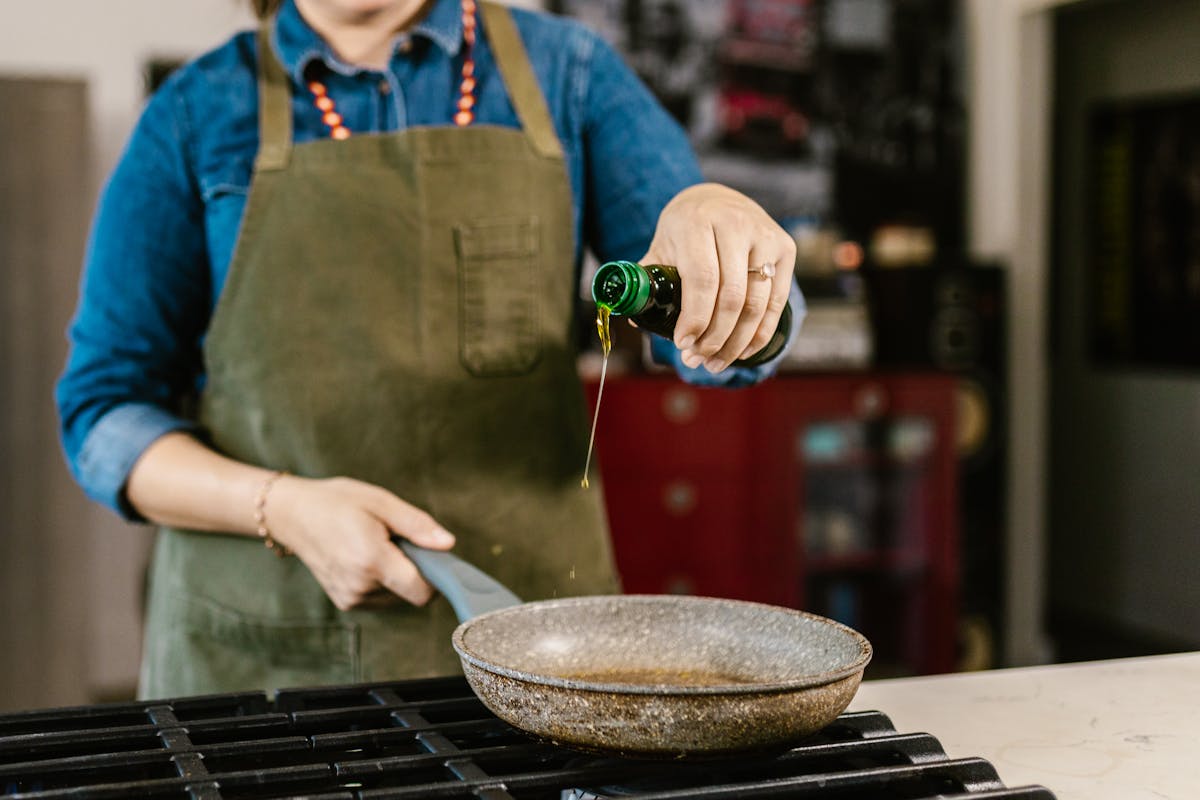
The Smoke Point Myth
The argument against cooking with extra virgin olive oil has always been the smoke point — the temperature at which oil begins to smoke and break down. EVOO’s smoke point sits between 190 and 210 degrees Celsius, depending on quality and freshness. Sunflower oil smokes at around 227 degrees. Avocado oil at 271 degrees. On paper, EVOO looks like the worst choice for heat.
But smoke point is not the right measure. What matters is oxidative stability — how well an oil resists breaking down into harmful compounds when heated. And on that measure, EVOO wins decisively. The De Alzaa study (2018) found that EVOO’s natural antioxidants protect it from degradation far more effectively than the polyunsaturated fats in seed oils, regardless of their higher smoke points.
Why EVOO Beats Sunflower Oil Under Heat
Sunflower oil is 52 percent polyunsaturated fat. Polyunsaturated fats oxidise rapidly when heated, generating toxic aldehydes, free radicals and trans fats. A study published in the Nutrients journal ranked extra virgin olive oil first out of 32 oils tested for health impact. Sunflower oil ranked twenty-first.
EVOO is 65 percent monounsaturated fat (oleic acid), which is far more heat-stable. Combined with its natural polyphenol antioxidants, it resists breakdown under cooking temperatures that would cause sunflower oil to produce harmful byproducts. For South African households that have used sunflower oil as the default for decades, the switch to EVOO is one of the simplest meaningful health upgrades available.
What Happens to the Polyphenols
Polyphenols do decrease with heat. At sauteing temperatures (around 120 degrees Celsius), approximately 40 percent of polyphenols are lost — but 60 percent remain. At roasting temperatures (170 degrees), around 75 percent are lost, but the remaining 25 percent still exceeds what most other oils contain raw. Even after cooking, EVOO meets the European Food Safety Authority threshold for its approved health claim on polyphenol content.
Food cooked in EVOO also absorbs beneficial antioxidants during the process. Baking preserves more polyphenols than frying or boiling. The practical conclusion: cooking with EVOO reduces but does not eliminate the health benefits, and you end up with a more nutritious dish than if you had used any seed oil.
Which Olive Oil for Which Method
For dressings, dipping and finishing: use the best cold pressed extra virgin olive oil you have. The full flavour profile shines when unheated. For sauteing, stir-frying and roasting (120 to 200 degrees): EVOO works perfectly. The smoke point is well above these temperatures and the antioxidants provide stability. For deep frying (175 to 190 degrees): EVOO handles this range, though refined olive oil gives a more neutral flavour. The USDA specifically recommends olive oil for deep frying.
Baking with Olive Oil
Replace butter with three-quarters the amount of olive oil. Eight tablespoons of butter becomes six tablespoons of olive oil. Since olive oil is 100 percent fat (butter is roughly 80 percent fat plus 20 percent water), add an extra quarter cup of liquid to the recipe. Mild or fruity EVOO works best for sweet baking — chocolate cakes and citrus cakes pair particularly well. Peppery EVOO suits savoury baking: focaccia, olive bread and savoury tarts.
The Bottom Line for South African Kitchens
The evidence is not ambiguous. EVOO is the most stable, most nutritious and safest cooking oil available. It outperforms sunflower oil under heat on every measure that matters — oxidative stability, harmful compound formation and retained nutritional value. The only trade-off is cost, and even that is offset by the health value of what you are putting into your food.
At O for Olive, our cold pressed extra virgin olive oil from Swartrivier Farm is produced for flavour, health and cooking — not just finishing.
Find a stockist near you or visit the farm to taste the difference.


